
tempi otturazione lenti formato 24x36 si telemetro incorporato e accoppiato le Leica IIIF sono anche sincronizzate per il flash non esposimetro |
slow speed too 24x36 frame size with coupled rangefinder inside Leica IIIF has synchro-flash plug-in no meter |
Detrola 400 the Detrola 400 was a complex Leica-style rangefinder. Detrola Corporation manufactured radios and cameras in Detroit Michigan ottica Velostigmat 3.5/50 rara  |
 |
|
Wica first type The Wica was a Leica copy made by Wiener Camera Werkstätte and apparently designed by R. Gerstendörfer of Vienna. It was presented in 1948 and is ultra rare. It had a synchronized focal plane shutter from 1/20 to 1/1000, with no slow speeds. It had a coupled rangefinder, separate from the viewfinder, a detachable back and an accessory shoe screwed to the top plate, but being essentially a hand crafted camera. ottica Schneider Xenon 2/50 rarissima 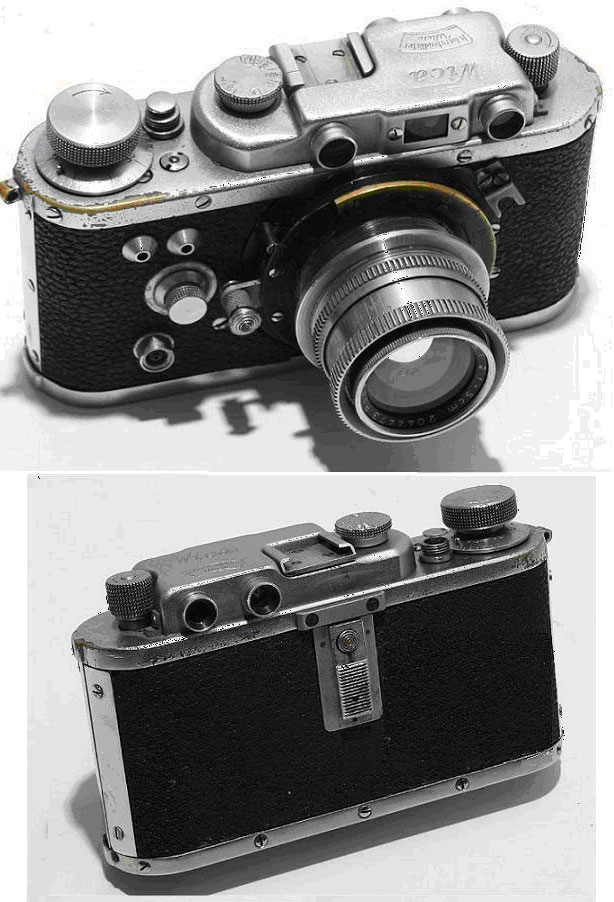 |
 |
|
Wica second type rare handmade "Wiener Camera", second long-top model, with RF coupled lens ottica Angenieux Type Z2 2.9/50mm rarissima   |
  |
|
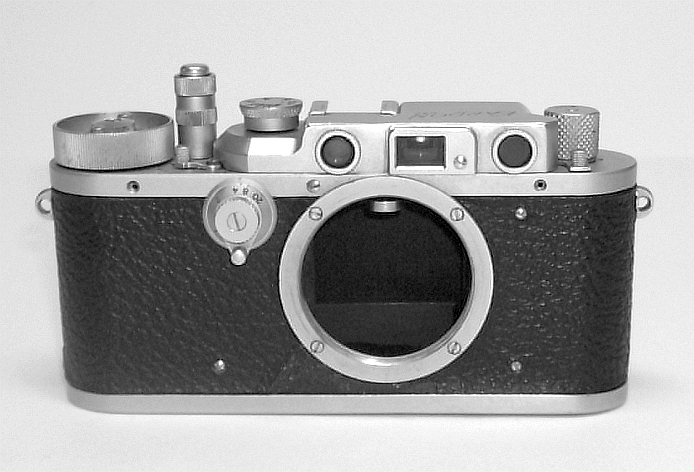
Military Kardon Made by the Premier Instrument Corporation this well designed camera (Army designation PH-629/UF) was intended to fulfill the Army’s need for an American version of the German-made Leica 111A. For the lens Kardon chose the reliable Kodak 47mm f/2 Ektar, and they delivered the first production samples in 1945. When WWII ended, the government cancelled its contract for this wonderful and improved “American Leica”. ottica Ektar 2/47 2.000 pezzi prodotti  |
   |
|
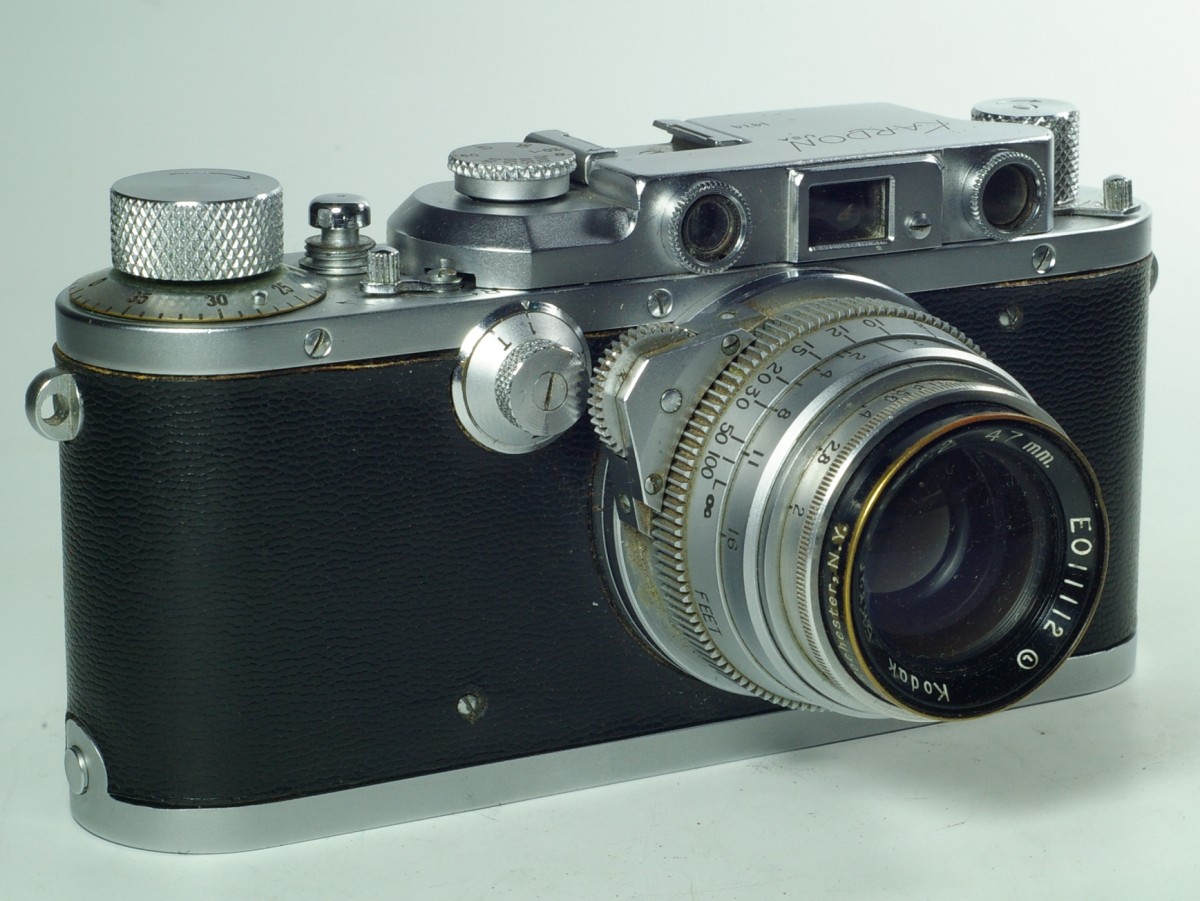
Kardon Civilian In an effort to recoup his investment, Peter Kardon, the president of Premier Instrument Corp. marketed a civilian version of his camera. The US Army issued a requirement for a camera capable of operating in extremes of temperature. The original Kardon was modified and around 1600 were subsequently sold for military use (a further 200 were sold to the general public). ottica Ektar 2/47 2.000 pezzi prodotti  |
 |
|
Janua La Janua e' una fotocamera 35mm a telemetro fortemente ispirata alla Leica ma con caratteristiche e prestazioni originali. La Janua viene equipaggiata con un otturatore a tendina con una gamma completa di velocità fino a un millesimo di secondo, con un esposimetro ad estinzione e con un obiettivo intercambiabile con innesto a baionetta. L'obiettivo costruito dalla stessa San Giorgio e' un EsseGi 50mm f/3.5 in montatura rientrante e vengono programmati altri obiettivi come un Kritios 50mm f/2.0 che non vengono messi in produzione. ottica Essegi 3.5/50 rara  |
 |
|
Borletti prodotte pochissime, praticamente a livello di prototipi ottica Eptaminar 50mm f2 rarissima 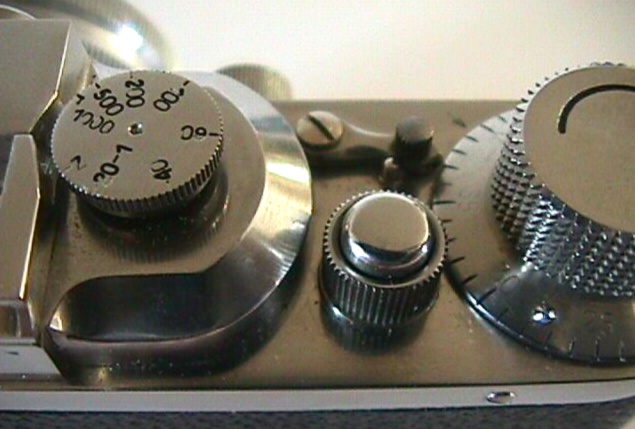  |
  |
|
Foca PF3B ( 3 stars ) bottone di carica otturatore / avanzamento pellicola ottica Oplarex 1.9/50 non comune  |
 |
|
Foca UR Marine Foca U.R. "Marine Nationale", 1959 O.P.L.-Foca, France. No. 215944 R, special edition of the Foca Universel R for the Navy, with small nameplate "Marine Nationale No. 333". ottica Oplarex 1.9/50 rara  |
 |
|
Foca Universel RC "Marine Nationale" The Foca URC is with less than 2.000 models ever made one of the rarest Foca models, and less than 100 of them were delivered to the Marine Nationale. ottica Oplarex 1.9/50 molto rara  |
  |
|
Foca PF3B ( 3 stars ) leva di carica otturatore / avanzamento pellicola ottica Oplar 2.8/50 non comune  |
 |
|
Vega IIa This is an original Wega IIa rangefinder camera, the very interesting italian Leica copy made in Pordenone by AFIOM in 1953. Speeds go from 1/20 to 1/1000, it is syncronized and with rangefinder. Top of the line, and more expensive in 1953. A very very rare camera. Trattasi di una interessante Wega IIa, una copia Leica italiana, costruita a Pordenone nel 1953 dalla AFIOM. Rara,uno degli apparecchi più interessanti della produzione italiana degli anni del dopoguerra, prodotta per un solo anno, con syncro flash frontale e senza tempi lenti ottica Anastigmat Trixar 3.5/50 300-500 pezzi 

|
  
|
|
Wega IIIa con syncro flash frontale e tempi lenti ottica Anastigmat Trixar 3.5/50 non comune |
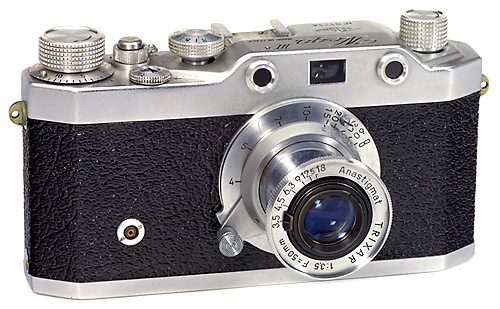 |
|
Ilford Witness Le fotocamere Witness furono prodotte da Ilford in Weybridge, Surrey. ottica Dallmeyer Super Six 1.9/50 250 pezzi prodotti  |
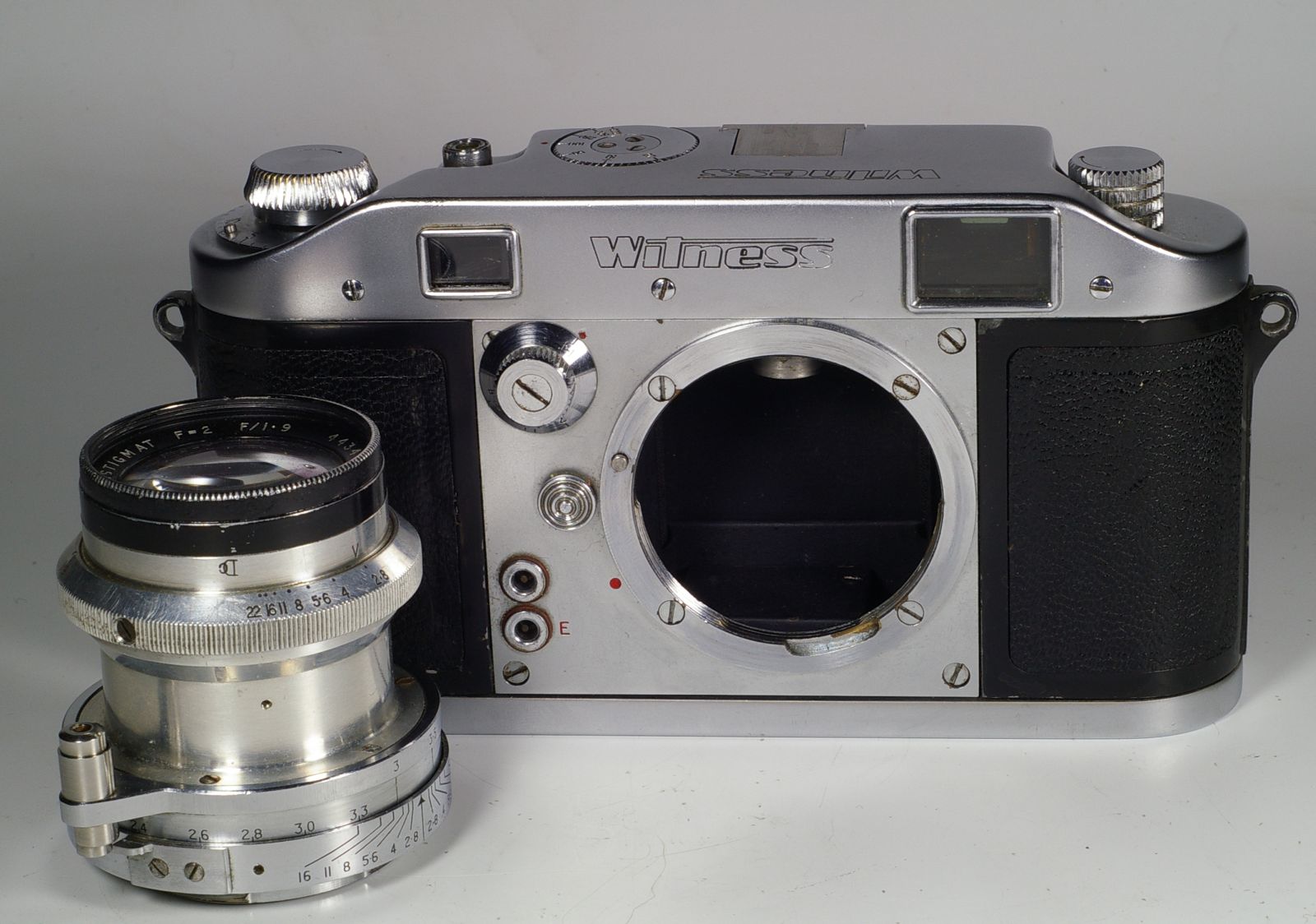  |
|
IsoLux ottica Luxar 50/3,5 rara  |
 
|
|
Jeicy Japanese Leica copy made in the 1950s, of which very few examples were made. The cameras were assembled by Kumagai Genji former developer of the Nippon wartime Leica copy. ottica NIKKOR Q.C 50:3.5 few cameras made |
||
Iso Bilux Iso Bilux camera were made by Iso (Industria Scientifico Ottica), in Milan. Very rare and unusual Leica copy from Italy. ottica Iriar 3.5/2.8 only 100 cameras made  |
 
|
|
Iso Standard ottica Iriar 3.5/2.8 rara  |
 |
|
Iso Reporter ottica Iriar 3.5/2.8 rara  |

|
|
Henso Reporter Dr. Hans Hensoldt, Wetzlar, 24 x 36 mm, no 6226. Focal plane shutter, rangefinder, folding rapid-advance lever ottica Arion 5cm F1.9 rara  |
  |
|
Gamma III special focal plane shutter with rigid aluminum curtains. With Trixar 3,5/50 mm, collapsible ottica 3,5/50 mm Gamma Trixar rara  |
  |
|
 1949 Chinaglia Kristall 2a "STAIBRITE" la prima fotocamera costruita in acciaio inossidabile, come la Borletti. La preserie della IIa poi prodotta era in pesante acciaio nichelato e riportava il logo sbagliato "staibryte" invece di "staybrite". preseries of 10 cameras in alloy anodized, with the WRONG logo "staibryte" instead od "staybrite". Kristall started his production after, different from this, with standard chromed metal. ottica Steinheil Quinon 50mm f1,9 prodotte circa 1.000  |
   |
|
Kristall 3 S rara, la prima con i tempi lenti ottica Steinar Anastigmat 50/3.5  |
 
| |
Kristall 53 ver.1 Kristall 53 camera is a well made Leica copy made in Italy in 1953 by Chinaglia, with Leica interchangeable lenses thread mount 39x1. Rangefinder coupled, with a very rare built-in multi-finder for lenses from 28mm to 105mm. Curtain shutter, speeds from 1 sec. to 1/1000. , a rarity by itself, because this camera is usually found with the 50mm f:3.5. Around 400/500 cameras have been made, and it is the best Kristall camera, the most complicated. E' una delle fotocamera italiane più rare, la Kristall 53, prodotta a Belluno dalla ditta Chinaglia agli inizi degli anni '50, venne presentata nel 1953. La prima versione e' facilmante riconoscibile per la presenza di finiture nere sulle ghiere di selezione tempi e riavvolgimento pellicola. Fotocamera a telemetro con ottiche intercambiabili passo a vite 39x1. Doppio oculare, uno per la messa a fuoco tramite telemetro e l'altro per l'inquadratura, era presente un particolare selettore per le focali che funzionava come un diaframma chiudendo due riquadri che delimitavano le focali di 28-35-50-75-90 e 105mm. Otturatore a tendina con tempi di scatto da 1 secondo a 1/1000 più posa B. ottica 50mm f:2.8 Krinon, 50/3,5 Kristall e Steinar Anastigmatic prodotte circa 300 
|


| |
Kristall 53 ver.2 The latest Kristall 53 had been produced with selection buttons fully chromed, probably made the last parts present in the factory. Le ultime Kristall 53 prodotte avevano i pulsanti di selezione completamente cromati, probabilmente realizzate con gli ultimi pezzi di ricambio presenti in fabbrica. ottica 50mm f:2.8 Krinon, 50/3,5 Kristall e Steinar Anastigmatic prodotte circa 100 
|


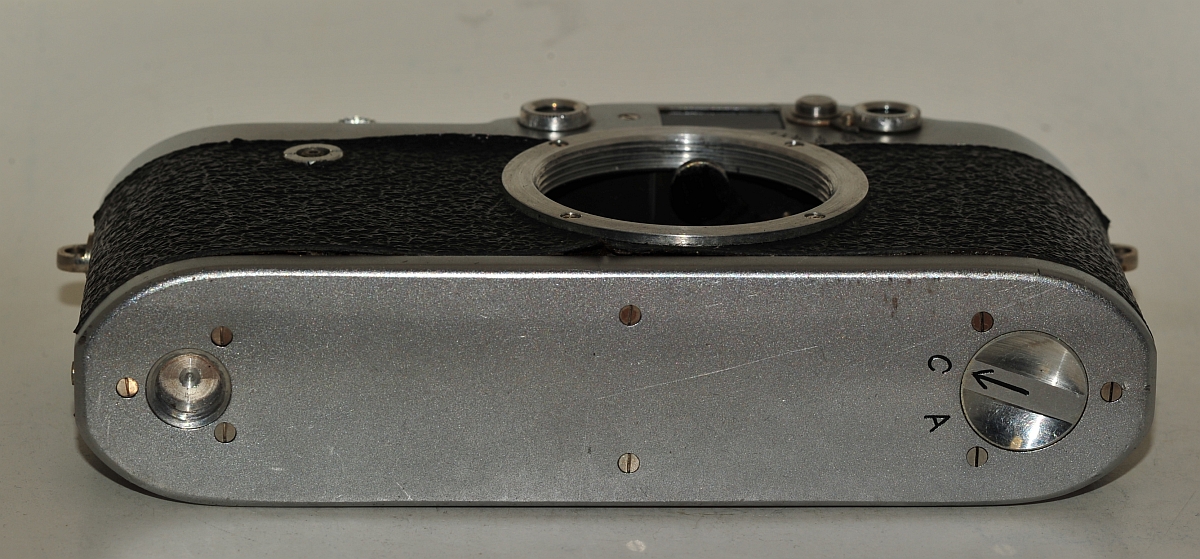
| |
Kristall R ottica Staeble Trigon 50mm f2.8 la più rara tra le Kristall, qualche centinaio di esemplari prodotti soprattutto per il mercato inglese, otturatore a tendina da 1/20 a 1/1000sec. This is the rarest Kristall done, a Leica copy produced overall for UK market. The shutter fire from 1/20sec. to 1/1000 sec. The lens is a very rare Staeble Trigon 50mm f2.8 prodotte circa 300   |
 
| |
Sonne V ottica Schneider Xenar 3.5/50 La Sonne V (o Sonne 5), ha una gamma dei tempi di otturazione estesa fino ad un secondo ed e' sincronizzata con il flash, ma monta un telemetro a base corta e pertanto non molto preciso con i teleobbiettivi. 500 pezzi prodotti  |
 
|
|
Sonne C ottica Schneider Xenon 2/50 Nel 1953 venne presentata la SONNE C (C sta per COLORE), una fotocamera con le stesse caratteristiche della Sonne V ma con piccole modifiche al mirino e dotata di un telemetro più grande. 450 pezzi prodotti  |
 |
|
Sonne C4 ottica Schneider Xenar 3.5/50 350 pezzi prodotti  
|

  
|
|
Reid IIIa ottica Taylor Hobson 2.0/50 1.200 pezzi prodotti  |
 |
|
Tanack IV-S ottica Tanar 3.5/50 5.000 pezzi prodotti  |
 |
|
Nicca Snider 35 ottica Nikkor 2.0/50 rarissima  |
 |
|
1956 Zuiho Opt. Tokyo Honor S1 The advance knob contains a film reminder disc. The shutter provides speeds from 1sec to 1/500sec, with the fast and slow speeds controlled by two separate dials. The camera is synchronized for flash, via one or two PC sockets at the front. The other unusual feature was a removable back, similar to that used on the Nikons and Contax cameras. Type 1 cameras were marketed "Honor Opt." on the top plate. Initially the shutter speeds progressed 20, 40 and 60. Type 1 cameras are marketed "Zuiho Opt.," and the speeds become 25, 50 and 75. The fastest speed on both versions was 500. The baseplate has protrusions for the tripod socket, which is in the center of the baseplate. Type II was similar to the Type I, but the tripod socket is moved to the end of the camera under the wind knob, and the protrusions on the baseplate have been eliminated. circa 400 picture courtesy of Pacific Rim Camera  |
   |
|
Alta very rare leica copy from Tokyo, only 500 Piece made 1957 years, with original Misuzu Kogaku 2/5cm ottica Misuzu Kogaku Altanon 2/50 500 pezzi prodotti  |
 |
|
 1957 Melcon I, Melcon II RARISSIME, soprattutto la versione II Very rare, overall the second version  |
  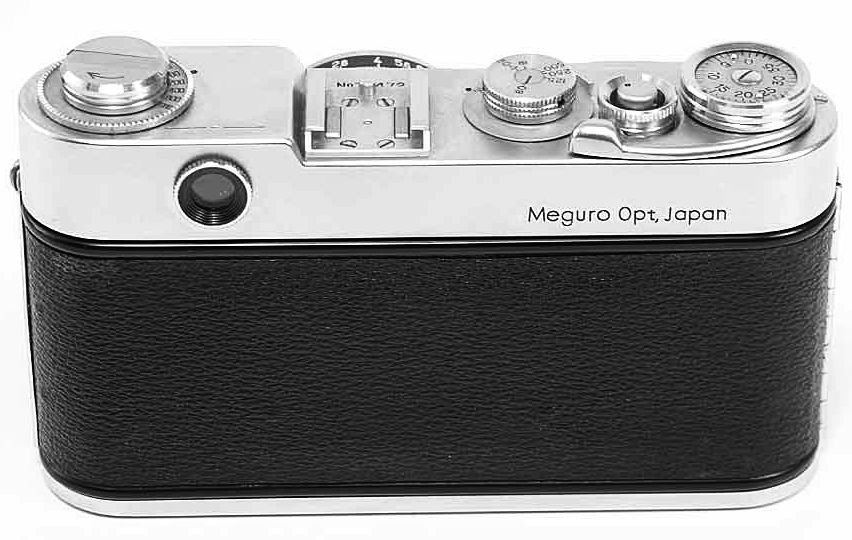 picture courtesy of Pacific Rim Camera |
|
Tanack V3 ottica Tanar 1.9/50 1.200 pezzi prodotti  |
 |
|
Honor S.L ottica Honor 1.9/50 300 pezzi prodotti  |
 |
|
 1960-1961 Shanghai 58 II Prototype Prototipo della Shanghai 58 II con ottica Shanghai macro, la fotoamera e' abbastanza differente dalla normale SHANGHAI 58 II, guarda le immagini. Non c'e' sistema di messa a fuoco, l'ottica focheggia da 0.35m a 0.8m solamente. Prototype of Shanghai 58 II w/macro lens, camera is quite different of the normal SHANGHAI 58 II, please view the pictures. There is no focusing system, and the lens focusing is from 0.35m to 0.8m only. ? pezzi prodotti 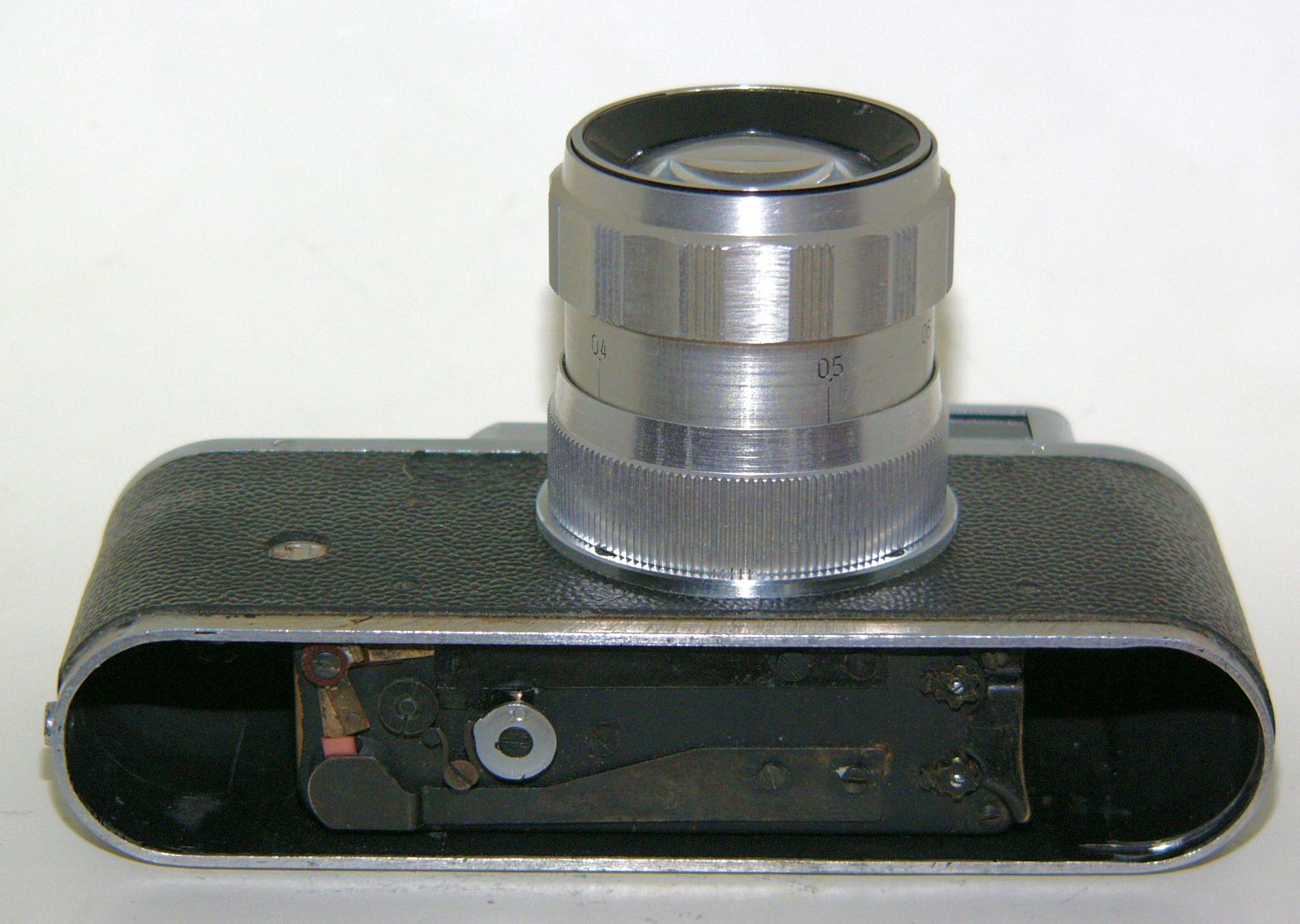 |
   |
|
Shanghai 58 III ottica Shanghai 3.5/50 la versione 3 ha la correzione diottrica mediante leva posta sotto la ghiera di ribobinamento 25.000 pezzi prodotti  |
 |
|
Shanghai 58 IV ottica Shanghai 3.5/50 la versione 4 NON ha la correzione diottrica 45.000 pezzi prodotti  |
 |
to contact me
 click on me !
from 10 Apr 07
visitors num.:
collectors


